
Restaurant English for Real Situations
In this lesson, you’ll learn how to manage real restaurant situations step-by-step—from the menus, main dishes, side dishes, specials, drinks, and desserts.
🎯 Level: Beginner, Intermediate ⏱ Time: 20–25 minutes 📘 Category: Speaking, Real-Life English
🎯 What You’ll Learn
By the end of this lesson, you will be able to:
- Understand a restaurant menu
- Identify starters, main courses, and sides
- Find drinks and desserts
- Ask about specials
- Order drinks confidently
- Use polite English when ordering
🥗 Reading the Menu
🧭 Understanding Starters and Appetizers
When you’re at a restaurant, the menu is your guide! 🗺️ The first section you often see is for starters or appetizers. These are smaller dishes meant to be eaten before the main course. They’re designed to whet your appetite and get you ready for the meal.
Think of them as a delicious preview of what’s to come! 😋
🧩 Starters / Appetizers
Small dishes before the main course → designed to stimulate appetite
📋 Types of Starters
- Salads → greens + dressing
- Soups → hot/cold, creamy/broth
- Dips → served with bread/chips
- Fried foods → mozzarella sticks, onion rings
- Seafood → shrimp cocktail, calamari
🧠 Deciphering Menu Descriptions
Menu descriptions can sometimes be confusing. Look for key ingredients and cooking methods. For example, “grilled asparagus with lemon vinaigrette” tells you the asparagus is grilled and the dressing is lemon-flavored.
Pay attention to adjectives like crispy, creamy, spicy, or tangy. These words give you clues about the dish’s texture and flavor.
🗣️ Asking Questions About Starters
Don’t be afraid to ask your server questions! If you’re unsure about an ingredient or preparation method, just ask. For example, you could say, “What kind of cheese is in the spinach and artichoke dip?” or “Is the calamari fried or baked?”.
Servers are there to help you make informed choices.
🍹 The Menu
🍽️ Understanding Menu Structure
When you’re at a restaurant, the menu is your guide! It’s usually divided into sections. Knowing these sections helps you find what you want. The most important distinction is between main courses and sides. Main courses are the primary dishes, while sides are smaller items that complement them.
🥩 Identifying Main Courses
Main courses, also known as entrées, are the star of the meal. They are typically larger and more substantial than other dishes. Look for sections titled “Main Courses,” “Entrées,” or sometimes “Plats Principaux” (especially in French-influenced restaurants). These dishes often feature a protein like meat, fish, or a vegetarian alternative.
Main courses are usually more expensive than sides or appetizers. For example, a steak, a salmon fillet, or a vegetarian lasagna would all be main courses. They often come with some accompaniments, but you might want to add extra sides.
🥗 Recognizing Side Dishes
Side dishes are smaller items designed to accompany the main course. They enhance the meal without being the primary focus. Common side dish sections might be labeled “Sides,” “Accompaniments,” or “Extras.”
Examples of side dishes include:
- Mashed potatoes
- Vegetables (like broccoli or asparagus)
- Salads
- Rice
- French fries
Side dishes are usually less expensive than main courses. They allow you to customize your meal and add variety.
🌍 Examples in a Menu
Let’s look at some examples:
Main Course: Grilled Salmon – Served with roasted potatoes and seasonal vegetables.
Side Dishes:
- Mashed potatoes
- Green Salad
- Steamed Asparagus
⭐ Specials
⭐ Understanding Daily Specials
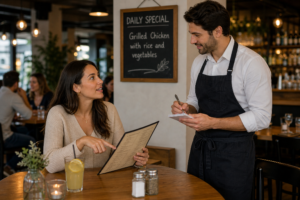
Many restaurants offer daily specials or promotions to attract customers. These are dishes or deals that are only available for a limited time, often just for a day or a week. Recognizing these can help you discover new favorites or save money. 💰
📍 How to Spot Them
Daily specials are usually presented in a few common ways:
Chalkboards: Look for chalkboards near the entrance or in the dining area. These often list the day’s specials.
Separate Menu Inserts: Some restaurants have small, separate menus or inserts highlighting the specials.
Verbal Announcements: Your server might tell you about the specials when they greet you. Pay attention!
🍴 Common Types of Specials
Restaurants use specials to highlight seasonal ingredients, test new recipes, or boost sales on certain days. Here are some examples:
1. Soup and Sandwich Combo: A popular lunch special, often at a reduced price.
2. “Taco Tuesday”: Discounted tacos on Tuesdays. 🌮
3. “Happy Hour” Appetizers: Reduced prices on appetizers and drinks during specific hours.
4. Chef’s Special: A unique dish created by the chef, showcasing their culinary skills.
🗣️ Questions to Ask
Don’t hesitate to ask your server about the daily specials. Here are some helpful questions:
- "What are the daily specials today?"
- Vegetables (like broccoli or asparagus)
- "What does the chef's special consist of?"
- "Are there any special promotions going on?"
- "How much is the special?"
🎯 Why Pay Attention?
Recognizing and understanding daily specials can enhance your dining experience. You might:
- Try something new: Specials often feature unique dishes not on the regular menu.
- Save money: Promotions can offer significant discounts.
- Enjoy seasonal ingredients: Specials often highlight fresh, seasonal produce.
🍹 Drinks & Desserts
🍹🍰 Finding Drinks and Desserts on the Menu
When you're ready to quench your thirst or satisfy your sweet tooth, knowing where to look on the menu is key. Most restaurants organize their menus logically, but let's explore where to find those beverages and desserts. This will help you navigate the menu with ease and order exactly what you want!
🥤 Spotting the Beverage Section
The beverage list is often found in one of a few common places. Look for a separate section, usually near the front or back of the menu. Sometimes, it's integrated into the main menu but clearly labeled. Keep an eye out for headings like:
- Drinks
- Beverages
- Wine List
- Cocktails
- Non-Alcoholic Drinks
🍮 Deciphering the Dessert Offerings
Just like beverages, desserts usually have their own dedicated section. This might be at the very end of the menu, or sometimes on a separate, smaller menu. Common headings include:
- Desserts
- Sweets
- After Dinner
- Pastries
Some restaurants might also list desserts under a heading like "Chef's Specials" or "Featured Items," so be sure to scan the entire menu. In Mexico, you might find traditional desserts like flan or churros.
🗺️ Understanding the Layout
Menus are designed to be easy to read, but layouts can vary. Some restaurants use a simple list format, while others use more elaborate designs with descriptions and photos. Pay attention to:
1. Headings and Subheadings: These guide you to the right section.
2. Descriptions: Read these to understand what each item includes.
3. Prices: Usually listed next to the item name.
4. Chef's Special: A unique dish created by the chef, showcasing their culinary skills.
🙋 Asking for Help
If you're having trouble finding the beverage or dessert list, don't be afraid to ask your server! A simple "Could you point me to the dessert menu, please?" or "Where can I find the drinks?" will do the trick. Servers are there to help you have a pleasant dining experience. They can also provide recommendations or explain any unfamiliar items.
⚖️ Vocabulary
🎧Listening
🔑 Takeaway
✅ Share this lesson:
Restaurant English for Real Situations Part 2 © 2026 by Joe Ehman is licensed under Creative Commons Attribution-NonCommercial-ShareAlike 4.0 International.