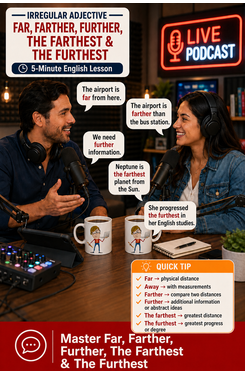
Irregular Adjectives: Far Part 3

This is Part 3 of a three-part series on three common irregular adjectives in English: good, bad, and far.
In this lesson, we focus on far, exploring its different forms and how it is used naturally in everyday English. We will look at how far changes when we compare things (far → farther → the farthest), and how native speakers actually use it in real-life situations such as describing experiences, making choices, and giving opinions. You’ll also see common expressions and examples that will help you sound more natural and confident when speaking.

🎯 Level: Beginner ⏱ Time: 5 – 10 minutes 📘 Categories: Adjectives, Grammar, Vocabulary

read more

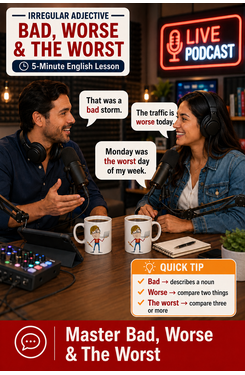
Irregular Adjectives: Bad Part 2

This is Part 2 of a three-part series on three common irregular adjectives in English: good, bad, and far.
In this lesson, we focus on bad, exploring its different forms and how it is used naturally in everyday English. We will look at how bad changes when we compare things (bad → worse → the worst), and how native speakers actually use it in real-life situations such as describing experiences, making choices, and giving opinions. You’ll also see common expressions and examples that will help you sound more natural and confident when speaking. 🎯 Level: Beginner ⏱ Time: 5 – 10 minutes 📘 Categories: Adjectives, Grammar, Vocabulary

read more

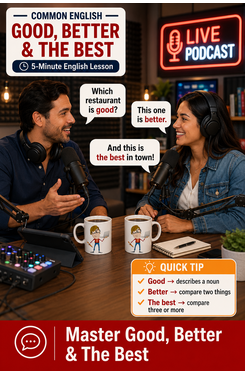
Irregular Adjectives: Good Part 1

This is Part 1 of a three-part series on three common irregular adjectives in English: good, bad, and far.
In this lesson, we focus on good, exploring its different forms and how it is used naturally in everyday English. We will look at how good changes when we compare things (good → better → best), and how native speakers actually use it in real-life situations such as describing experiences, making choices, and giving opinions. You’ll also see common expressions and examples that will help you sound more natural and confident when speaking.

🎯 Level: Beginner ⏱ Time: 5 – 10 minutes 📘 Categories: Adjectives, Grammar, Vocabulary

read more

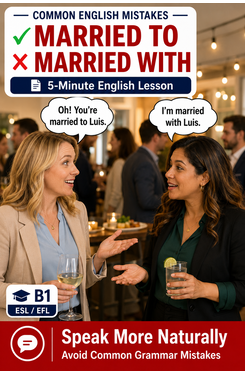
Common Mistakes English Learners Make & How to Fix Them

English learners commonly mix up fun/funny, borrow/lend, prepositions, question word order, irregular plurals, double negatives, literal translations, articles, and say/tell. Mastering these fixes builds clearer communication, boosts confidence, and helps you sound more natural in American English.

🎯 Level:Intermediate ⏱ Time: 5 – 10 minutes 📘 Categories: Real English, Grammar, Vocabulary

read more

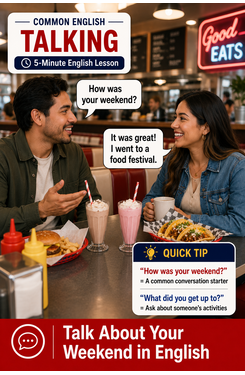
Talking About Personal Experiences

Talking about personal experiences is an important part of everyday communication. In this lesson, you’ll learn how to discuss weekend activities, share stories, describe memorable events, express feelings, and ask follow-up questions. These skills will help you have more natural, engaging, and confident conversations in English.

🎯 Level: Beginner, Intermediate ⏱ Time: 20–35 minutes 📘 Categories: Real English, Speaking

read more

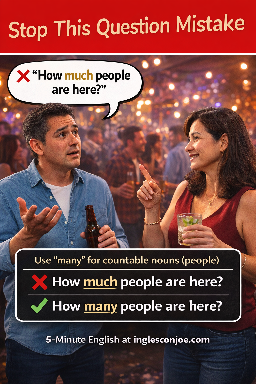
Asking Questions Clearly

Learn how to form questions correctly in English using clear structure and common question words. This quick 5-minute lesson helps you avoid mistakes, improve accuracy, and build confidence. Practice with examples and test your skills in a 20-question quiz to earn your FREE Certificate of Achievement.

read more

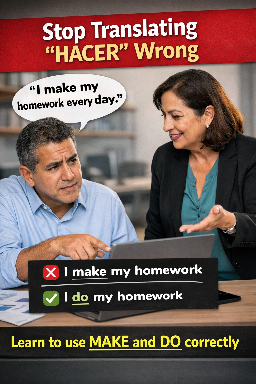
Make -vs- Do

Learn the difference between make and do, two common verbs often confused by Spanish speakers. Understand key patterns, collocations, and when to use each verb correctly. Practice with examples and avoid typical mistakes caused by translating “hacer.” Improve your accuracy and confidence using make and do in everyday English.

read more

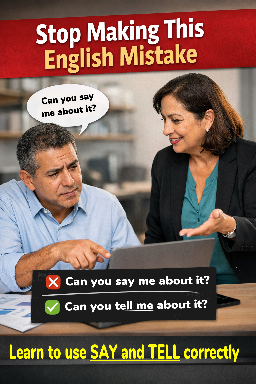
Say -vs- Tell

Learn the difference between “say” and “tell” in English. Use “say” for the message and “tell” for the person receiving it. Remember the structure “tell + someone + to + verb” for instructions. Avoid common mistakes like “say me” and “tell that.” Master key expressions and improve accuracy in everyday communication quickly.

read more

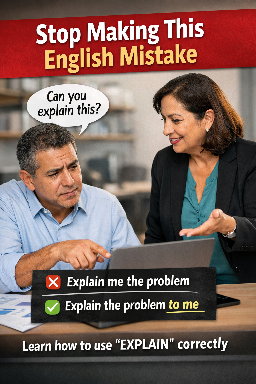
The verb “Explain”

Many English learners say **“Explain me”**, but it’s incorrect. Learn how to use the verb **explain** correctly with clear grammar patterns, examples, and common mistakes to avoid. Improve your English communication and start explaining ideas clearly and naturally in everyday conversations.

read more

Using Articles (a, an, the)

This lesson covers a core grammar structure (articles: a, an, the). It uses simple examples and everyday vocabulary, focuses on clear rules with basic practice and includes simple geography rules.

read more