
Advanced English Lessons Deep Dive Courses
Deep Dive Lessons are intensive English courses for high-intermediate to advanced students. Each course explores a specific topic in depth, focusing on vocabulary, expressions, grammar, pronunciation, and real-world usage. Courses are self-study and range from one to three hours helping students develop greater fluency, confidence, and understanding.
| Image | Course Title & Link | Course Summary |
|---|---|---|
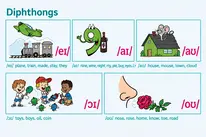 | Sounds that Trick Us | This lesson works on three of the worst offenders — the OUGH spelling family, homophones, and the five true diphthongs — and it keeps returning to one principle the whole way through: spelling does not consistently represent modern pronunciation. |
 | From Farm Tables to Fast Food | By the end of this lesson, you'll be able to explain why Americans eat the way they do, describe how food production changed over the past century, compare food traditions across U.S. regions, and talk about iconic American dishes using new vocabulary in English. |
 | Travel English: Your US Trip Part 1 of 5 | This lesson is organized into five parts. 1. Understand airport and in-flight announcements 2. Complete the US Customs Declaration Form correctly 3. Communicate confidently with immigration officers 4. Navigate bio-metric screening and secondary inspection 5. Arrange taxis, ride shares, and hotel shuttles |
 | Travel English: Your US Trip Part 2 of 5 | Part A — Hotel Check-In: Key vocabulary, check-in phrases, confirming your reservation, asking about fees and amenities, requesting room types, and navigating to your room Part B — Dining Out: Making a reservation, arriving and being seated, reading the menu, ordering food and drinks, communicating dietary needs, and paying the bill with confidence |
 | Travel English: Your US Trip Part 3 of 5 | This lesson is your practical guide to communicating confidently in everyday situations across the United States. You will learn to: Identify the five main types of public transportation in the US and know when to use each Buy tickets, understand fares and passes, and navigate payment methods confidently Read route maps, schedules, and transit signage Ask which bus or train to take, confirm your direction, and request a stop, and more |
 | Travel English: Your US Trip Part 4 of 5 | Section A — Tourist Situations Buying tickets · Guided tours and audio guides · Photo etiquette · Shopping for souvenirs · Prices, sizes, and bargaining Section B — Problems and Complaints Politely getting attention · Hotel issues · Restaurant complaints · Lost or stolen items · Asking for a manager · Stating a clear resolution |
 | Travel English: Your US Trip Part 5 of 5 | Your trip isn't over until you land back home — and the departure stage is where fluent, confident English matters most. In this lesson, you'll practice the real conversations that come with confirming flights, settling hotel bills, clearing security, and handling the unexpected. |
| Introduction to Contract Law | This Lesson Covers: 1. Was a contract formed? 2. What does the contract require? 3. Is the contract enforceable? 4. What happens if it is broken? |
 | Mastering Online Business Presentations in English for American Audiences | Mexican professionals across all industries (e.g., finance, tech, manufacturing, sales) with C1 English proficiency (advanced, fluent, seeking polish for American audiences). Format: Self-paced online course delivered via a simple web page with text-based lessons, quizzes, and self-assessment activities. |
 | Navigating Narcissism in the Workplace | How do you deal with a narcissistic coworker, boss, or client? In this lesson, you’ll learn practical strategies to recognize narcissistic behavior, set boundaries, communicate effectively, and stay focused under pressure. This is an intensive deep-dive lesson that takes approximately 1–2 hours to complete, depending on your English level. Perfect for professionals who want to handle difficult workplace relationships with greater confidence. |
| The Car: More Than Just a Machine | In this lesson, we will explore the fascinating journey of the automobile and its impact on the modern world. Here's what you will learn: How cars have transformed our culture, economy, and personal identities., Understand the car as a symbol of freedom, status, and progress, not just transportation. |
 | Modern Leadership | In this lesson you will: Explore the difference between leaders and managers, Discover what makes an effective leader, Analyze four key leadership styles, Study a real-world case: Elon Musk, and Practice expressing opinions in professional English Think of the best leader you've ever had — at work, in school, or in your community. What made them stand out? Was it the way they spoke? How they treated people? Their vision? Take a moment to reflect before we dive in. |
 | Explaining Problems, Failures & Technical Issues | In professional environments, saying "it's broken" is not enough. Learn to describe what went wrong, why it happened, and how it was resolved — clearly, precisely, and in natural English. Use precise vocabulary for physical, mechanical, and software problems; Distinguish failure vs. inoperable and break down vs. wear out; Correct direct-translation errors from Spanish and more. |
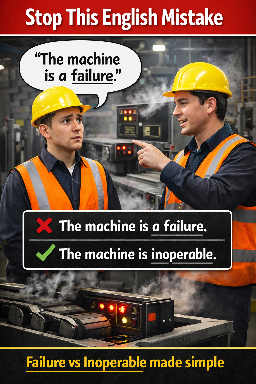 | Failure vs. Inoperable | Two words. Two meanings. One common mistake. "Wait... failure and inoperable aren't the same thing?" Imagine you write this in an email: "The printer had a failure and now it is failure." Does that sound right? Nope. But if you're thinking in Spanish, it almost makes sense — because "fallo" can cover a lot of ground. In English? You need two different words. Let's fix that right now. |
 | Job Interview Success | You Don't Need Perfect English. You Need Confident English. Many talented Mexican professionals hold back from international opportunities because of one fear: "My English isn't good enough." This course will show you why that fear is costing you — and how to turn your bilingual background into your greatest professional advantage. |
 | Introduction to the Stock Market | This class explores how global stock markets work, where they came from, and how to discuss them confidently in English. Designed for Upper-Intermediate to Advanced learners. This class is divided into three blocks: Block 1 — History & Origins Block 2 — How It Works Block 3 — Strategies & Discussion |
 | Restaurant English | Meet Carlos — a Mexican traveler visiting the United States for the first time. He's excited, a little nervous, and ready to enjoy a real American restaurant experience. The challenge? He needs to order, ask for things, and pay the bill — all in English. |