
Learn English with Movies

Movies offer an immersive and engaging way to learn English. They provide exposure to natural conversations and cultural contexts, helping you understand the language in a more dynamic way than textbooks alone can offer.

This lesson will show you how to:

Use effective techniques for active viewing and learning.
Use subtitles strategically to enhance comprehension.
Improve your vocabulary, pronunciation, and cultural awareness.

read more

Thanksgiving in the United States

Thanksgiving in the United States is a holiday that celebrates gratitude, harvest traditions, and family. Indigenous nations held ceremonies of thanks long before Europeans arrived. Early European settlers also observed thanksgiving events, including the 1621 harvest gathering between the Pilgrims and the Wampanoag. In 1789, George Washington declared the first national day of thanksgiving, and in 1863 Abraham Lincoln made it an annual holiday during the Civil War. Modern traditions—family meals, turkey, parades, football, and travel—developed over the 1900s. In 1941, Congress set Thanksgiving as the fourth Thursday of November, creating the holiday Americans celebrate today.

read more

Where are you from?

Learn greetings, countries, nationalities, verb “to be”, alphabet, personal objects, demonstratives, possessives, and speaking practice with exercises for immediate practice.

read more

Bringing it all Together -ed & -ing Adjectives

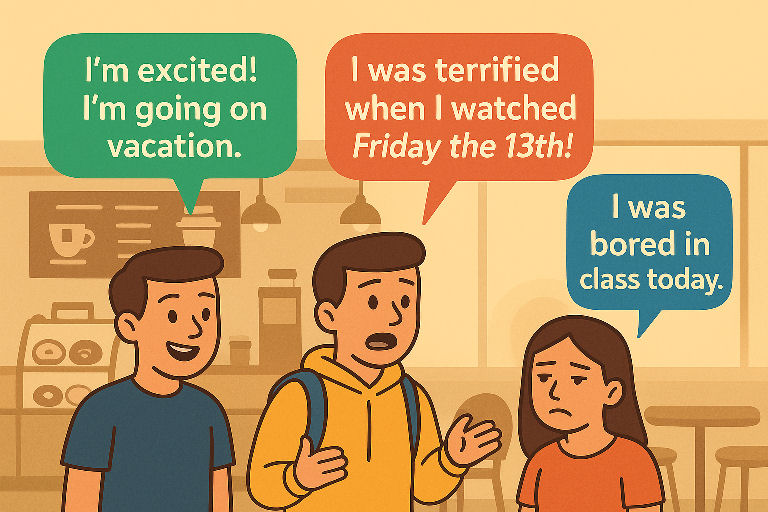
Learn the crucial difference between -ed and -ing adjectives in English. Adjectives ending in -ed describe how someone feels (e.g., bored, excited, tired), while -ing adjectives describe what causes that feeling (e.g., boring, exciting, tiring). Use -ed for the receiver of the emotion and -ing for the source. Understand through examples like ‘the movie was boring’ (cause) vs. ‘I was bored’ (feeling). Practice with guided questions to express yourself clearly.

read more

-ing Adjectives: Describing Causes, Not Feelings

By the end of this lesson, you will be able to confidently use these adjectives. We will cover:

What -ing adjectives are and how they describe the source of an emotion.
Why understanding the cause-and-effect relationship is crucial.
How to avoid common mistakes and distinguish -ing words from verbs.

✅ Score 75% or higher and you’ll earn a FREE Certificate of Achievement, delivered straight to your Email. Show off your progress and celebrate your hard work — you’ve earned it! 🌟

read more

Understanding -ed Adjectives

Ever struggle to find the right word for how you’re feeling? It happens to all of us! Luckily, English has a super handy tool for this: adjectives that end in ‘-ed’. Think of them as little windows into your heart and mind. Getting these right is a game-changer for expressing yourself clearly and understanding how other people feel, too. It’s all about connecting on a deeper level.
*What -ed adjectives are and how they describe internal feelings
*Why they are so important for talking about your emotions
*How using them correctly helps you express personal experiences and connect with others

read more

-ed vs -ing Adjectives: Expressing Feelings & Situations

Welcome to this intensive self-study course! By the end, you’ll be able to confidently use adjectives ending in -ed and -ing to describe feelings and situations in English. This course connects grammar with real-life experience so learning is practical, engaging, and memorable.

read more

Starter English

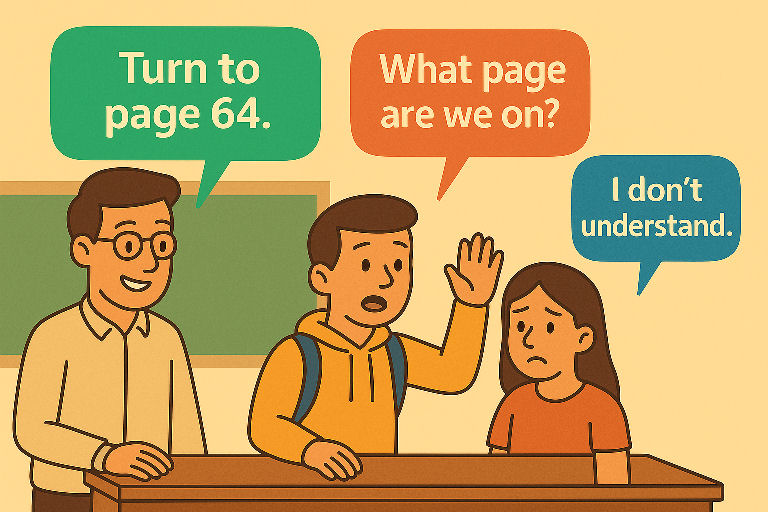
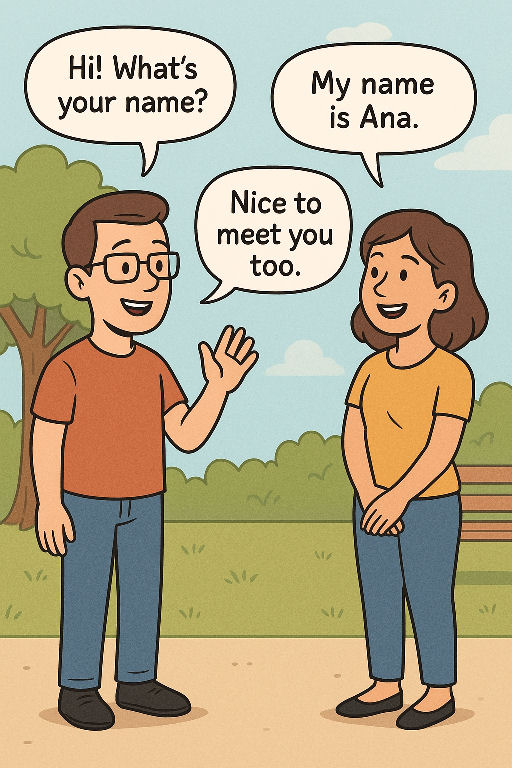
Welcome to the first step of your English language journey! This lesson is designed for absolute beginners and will introduce you to the fundamental building blocks of English communication. You’ll start with the basics of meeting new people and navigating a classroom environment.

read more