
🎓 Language Acquisition — Online English Teaching (lesson 4)
Grammar as Spotlight, Not Engine
Learn when and how to deliver grammar clarifications that actually stick. You’ll master the art of brief, well-timed explanations that build real fluency instead of just rule knowledge.
Timing Your Grammar Clarifications 🧱📚
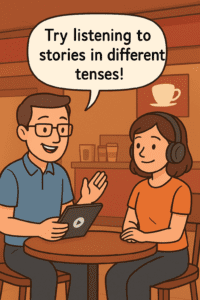
Here’s the thing: grammar explanation works best when it comes after students have already encountered the language in context. Think of it as confirming what they’ve started to notice, not introducing something brand new.
The Sequence That Works
Start with meaningful exposure. Show a video, discuss an image, or have a conversation where the target structure appears naturally. No grammar talk yet.
Then move to guided noticing. Ask questions like “What structure do you see repeated?” or “What comes after ‘have’?” Let students articulate what they’re seeing.
Now you’re ready for a brief clarification. Keep it under 5 minutes. You’re shining a spotlight on what they’ve already begun to process.
Finally, get them using it immediately in meaningful communication.
Procedural vs Explicit Knowledge🌱📘➡️🗣️
Ask a native speaker why we say “She’s been working all day.” Most can’t explain the rule. But they produce it instantly. That’s procedural knowledge — automatic, real-time language processing.
Grammar explanation builds explicit knowledge — the conscious understanding of how language works. Here’s the catch: explanation alone doesn’t convert one into the other.
Acquisition isn’t logic-driven. It’s exposure-driven. The solution isn’t more grammar lectures. It’s focused noticing, targeted feedback, and repetition across varied contexts.
Activities That Build Procedural Knowledge 👩🎓💬❌
Not all practice activities are created equal. Some build real fluency while others just create short-term performance gains. Here’s what actually works for moving grammar from working memory to automatic use.
Recycling: The Missing Link 📝⚙️
One lesson doesn’t create acquisition. Fluency grows from repetition across time, not single-lesson mastery. Without recycling, students forget or fossilize. Here’s how to build effective recycling patterns.
Students encounter the structure in meaningful context. You guide them to notice patterns and provide a brief clarification. They use it in communicative activities.
Bring the structure back in a different context. Maybe it appeared in a travel discussion last week — now use it for talking about work experiences. Same grammar, fresh meaning.
Integrate the structure into more complex tasks like storytelling or debates. Students must retrieve and use it while managing other cognitive demands.
Address errors collectively rather than interrupting individuals. This lowers anxiety and allows natural uptake. Use anonymous error examples from breakout rooms.
The goal is moving grammar from fragile working memory to long-term procedural memory. This requires repeated meaningful use over weeks, not intensive drilling in one session.
Testing a Common Assumption 🧠✅❓
Many instructors rely heavily on grammar drills, especially in online environments where they’re easy to set up and grade. But do drills actually build the fluency we’re after?
Mechanical grammar drills are effective for building long-term fluency because they provide intensive practice with target structures.
Your Grammar Integration Checklist
Use this checklist to plan your next lesson with well-timed grammar clarification:
Before the Lesson
- Identify one grammar structure to focus on
- Prepare meaningful exposure material (video, images, discussion prompts)
- Write 2-3 guided noticing questions
- Plan a communicative activity for immediate use
During the Lesson
- Start with exposure — no grammar explanation yet
- Guide students to notice patterns themselves
- Keep your clarification under 5 minutes
- Move immediately to meaningful practice
After the Lesson
- Note which structures need recycling next week
- Collect error patterns for delayed feedback
- Keep your clarification under 5 minutes
- Plan a varied context for the next encounter
Remember
You're not delivering grammar. You're building cognitive pathways.
Key Takeaway 💡🗝️
The Spotlight Principle
Grammar explanation is a spotlight, not the engine. The engine is repeated meaningful interaction. Keep clarifications brief (under 5 minutes), time them after exposure and noticing, follow immediately with communicative use, and recycle across weeks. This sequence respects how acquisition actually works and builds the procedural knowledge your students need for real fluency.
About Joe
Joe Ehman — Founder, Inglés con Joe
Joe is the founder of Inglés con Joe and has spent years teaching English online to Spanish-speaking learners across Mexico and Latin America.
His approach blends second language acquisition research, structured grammar awareness, and practical fluency development. Rather than teaching rules in isolation, Joe focuses on how learners actually internalize language over time.
Through this certification, Joe trains teachers to move beyond worksheet-driven instruction and into acquisition-aligned methodology that produces measurable fluency growth.
His mission is simple: Better trained teachers create more confident English speakers.