Asking Questions Clearly

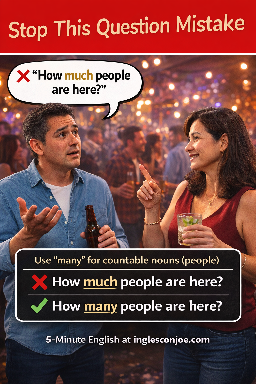
Learn how to form questions correctly in English using clear structure and common question words. This quick 5-minute lesson helps you avoid mistakes, improve accuracy, and build confidence. Practice with examples and test your skills in a 20-question quiz to earn your FREE Certificate of Achievement.

read more

Explaining Problems at Work

Learn to explain problems clearly in professional English. This lesson shows you how to describe issues, identify causes, explain results, and present solutions using precise vocabulary. You’ll also understand the difference between “failure” and “inoperable” to communicate more accurately and confidently in real workplace situations.

read more

Conspiracy Theories: Advanced English Conversation & Critical Thinking

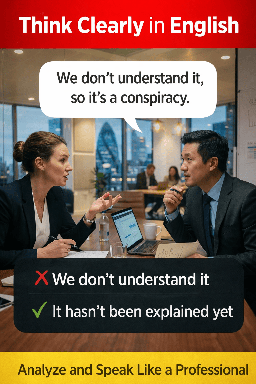
Analyze how conspiracy theories are formed and why people believe them. Learn to evaluate ideas critically, argue your position with clear structure and evidence, and express your thoughts using precise, professional English. Build the communication skills you need to discuss complex topics confidently and effectively in real workplace situations.

read more

Failure -vs- Inoperable

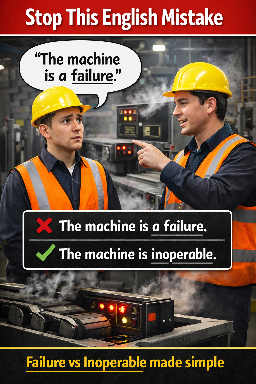
Understand the difference between failure and inoperable, two commonly confused words. Learn when to describe an unsuccessful result and when to describe something that cannot function. With simple explanations and practical examples, you’ll avoid common mistakes and use both words accurately in everyday English.

read more

Make -vs- Do

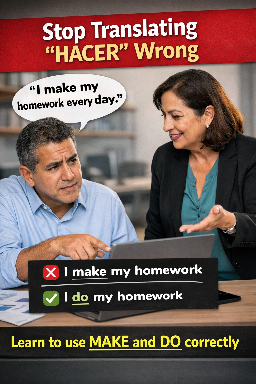
Learn the difference between make and do, two common verbs often confused by Spanish speakers. Understand key patterns, collocations, and when to use each verb correctly. Practice with examples and avoid typical mistakes caused by translating “hacer.” Improve your accuracy and confidence using make and do in everyday English.

read more

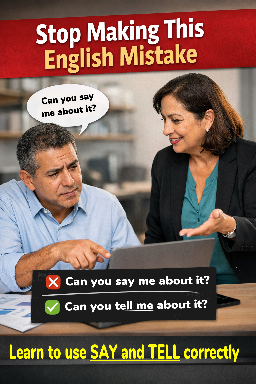
Say -vs- Tell

Learn the difference between “say” and “tell” in English. Use “say” for the message and “tell” for the person receiving it. Remember the structure “tell + someone + to + verb” for instructions. Avoid common mistakes like “say me” and “tell that.” Master key expressions and improve accuracy in everyday communication quickly.

read more

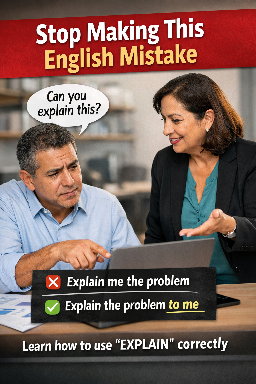
The verb “Explain”

Many English learners say **“Explain me”**, but it’s incorrect. Learn how to use the verb **explain** correctly with clear grammar patterns, examples, and common mistakes to avoid. Improve your English communication and start explaining ideas clearly and naturally in everyday conversations.

read more

What do you do?

Learn how to talk about jobs in English. In this Level 1A lesson, you’ll practice simple questions and answers like “What do you do?” and “What’s your job?” while learning common job vocabulary for everyday conversations.

read more